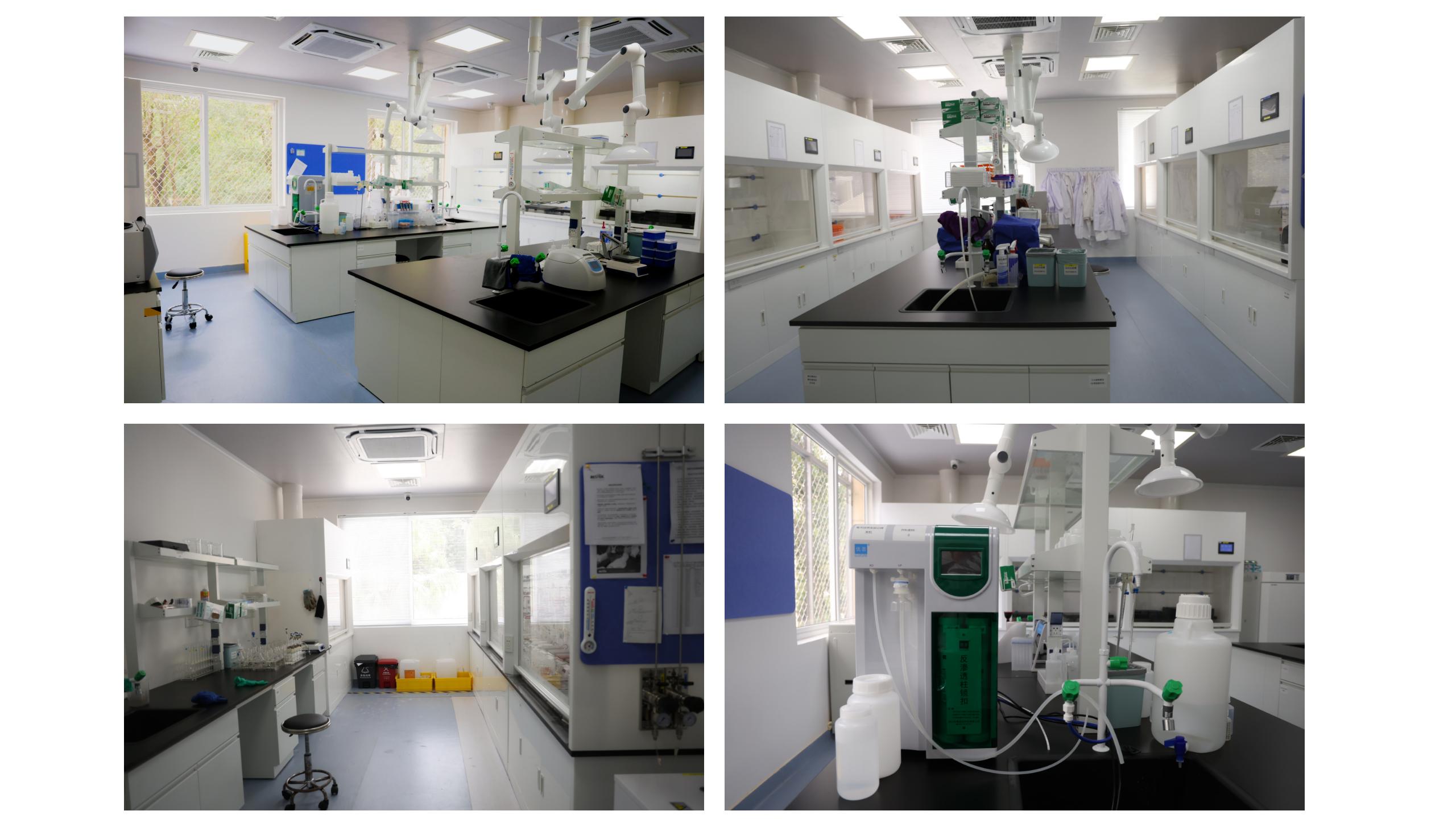
Iron, nickel and cobalt content is one of the most important parameters of diamond micron powder, especially for PCD sintering and precision polishing. Regular industrial powder contains 500–2000 ppm of these metals, PCD-grade — less than 65 ppm. The 10–30 times difference is achieved by a complex purification process, which we break down in this article.
Where Impurities Come From
Synthetic diamonds are produced by high-pressure high-temperature (HPHT) method using a metal solvent catalyst — usually an alloy of iron, nickel and cobalt. After synthesis, diamond grains are extracted from the catalyst, but some metal remains on grain surfaces and in microcracks. During subsequent crushing, these metallic inclusions enter the powder. Additionally, iron enters the powder during crushing and milling from wear of steel equipment.
How Impurities Affect Quality
- PCD sintering: at 1400–1600°C, Fe/Ni/Co react with diamond, causing localized graphitization. This leads to defects in the PCD structure, reduced strength and thermal conductivity.
- Optics and semiconductor polishing: iron particles scratch the processed surface. One scratch on an optical component can cost more than the entire powder.
- Tool sharpening: metallic impurities reduce powder cutting ability and accelerate wheel wear.
Method 1: Acid Treatment
The main method for removing Fe/Ni/Co is boiling the powder in a mixture of concentrated hydrochloric (HCl) and nitric (HNO3) acids in a 3:1 ratio ("aqua regia"). Acids dissolve metallic inclusions without affecting diamond (diamond is chemically inert). The process is repeated 2–4 times, each time decanting spent acid and washing the powder with distilled water to neutral reaction (pH 6.5–7.5). After acid treatment, Fe/Ni/Co content drops from 500–2000 ppm to 100–200 ppm.
Method 2: Magnetic Separation
After acid treatment, fine ferromagnetic particles remain that could not be dissolved (they are inside closed cracks in diamond grains). For their removal, magnetic separation is used: powder is passed through a strong magnetic field zone, ferromagnetic particles are attracted and separated. For PCD-grade, high-gradient magnetic separation with field strength up to 2 Tesla is used, allowing removal of even the finest magnetic particles. After magnetic separation, Fe/Ni/Co content drops to 65 ppm and below, and magnetic impurities to 0.1%.
Control at Every Stage
To consistently achieve low impurity content, manufacturers control quality at every stage: incoming control of raw diamond grains (residual catalyst content), control of milling equipment wear (using ceramic and carbide grinding media instead of steel), control of acid concentration and temperature, control of wash water quality (resistivity >1 MΩ·cm), final control by atomic absorption spectrometry.
Fe/Ni/Co content below 65 ppm is not marketing, but the result of 2–4 acid treatment cycles + high-gradient magnetic separation + multi-stage control. If a supplier claims PCD-grade but cannot provide a test report with Fe/Ni/Co content, it's a reason to doubt.
Frequently Asked Questions
How dangerous are Fe, Ni, Co impurities?
For PCD sintering, transition metal impurities are critical: they cause catalytic graphitization of diamond at high temperatures, reducing PCD strength. For optical polishing, metallic inclusions scratch surfaces and can migrate into semiconductor structures. For stone processing, impurity impact is minimal.
How is impurity content measured?
Fe, Ni, Co content is measured by atomic absorption spectrometry (AAS) or ICP-MS. Magnetic inclusions are determined by magnetic separator followed by weighing. Both methods are included in the standard Chinese state lab protocol. We provide results in ppm (parts per million).
Can impurities be reduced in standard powder?
Yes, we offer additional purification for batches with higher requirements: acid treatment, magnetic separation and flotation. This reduces Fe+Ni+Co from standard 200–500 ppm to < 65 ppm (PCD-grade). Additional purification increases cost by 30–50%, but is necessary for PCD and optical applications.
Related Articles
Practical tip
For a first purchase we recommend a trial batch from 1 kg: test the fraction on your equipment before a bulk order. Every trial batch comes with a report (particle size, Fe+Ni+Co). Standard W5/W10/W20 fractions are always in stock — ships within 48 hours.
Why Catalyst Choice at Synthesis Affects the Finish
Impurity content is set at the synthesis stage. The HPHT process uses different solvent-catalyst systems — mainly iron-nickel and cobalt-bearing alloys. The amount and form of residual metal in a finished grain depend directly on which catalyst was used and how the cell was built. That is why two powders that look alike can require different numbers of acid cycles: in one, impurities sit on the surface and are easy to strip; in another they are locked in closed defects and removable only by magnetic separation.
Purity Levels by Application
| Level | Fe+Ni+Co | Magnetic | Where sufficient |
|---|---|---|---|
| Regular industrial | 500–2000 ppm | 0.5–2% | Stone, rough tools |
| Mid (SCMD-A) | 100–300 ppm | 0.2–0.5% | Tool sharpening, general grinding |
| PCD-grade (SCMD-AA) | <65 ppm | <0.1% | PCD sintering, optics, semiconductors |
Buying PCD-grade where industrial suffices means overpaying 30–50% for no practical benefit. Conversely, economizing on purity for PCD is not an option: one ruined PCD blank costs many times the powder price difference.
Two Clarifying Questions
Why can't one acid boil-down reach 65 ppm?
A single acid cycle dissolves only surface inclusions; metal locked in microcracks and grain boundaries remains. It takes 2–4 cycles with gradually lower residual concentration plus mandatory high-gradient magnetic separation. One acid cycle yields 100–200 ppm, not 65 ppm.
How should impurity limits be written into an order?
Avoid vague "clean powder" and state a specific total Fe+Ni+Co limit (e.g. ≤65 ppm), magnetic impurities separately (≤0.1%), and the control method (AAS or ICP-OES). Then acceptance is objective and quality disputes are practically impossible.
Conclusion
Fe/Ni/Co is a parameter set at synthesis and refined by purification. Understanding where impurities come from and how they are removed lets you choose rationally between regular industrial powder and PCD-grade — neither overpaying where it is unnecessary nor saving where the cost of error is high.
Why a Report Shows Two Different "Iron" Numbers
A report usually lists two separate lines: total Fe+Ni+Co (ppm) and magnetic impurities (%). This is not duplication but two different cuts. Total metals reflect overall catalyst contamination, including the finest particles that magnetic separation can no longer catch. Magnetic impurities are exactly those larger ferromagnetic particles that can catch on a part during polishing and leave a visible scratch. Both numbers matter for PCD: the total affects sintering, the magnetic share affects surface finish. If a report shows only total iron without magnetic impurities, ask for the second line — without it the picture is incomplete.
Product inquiry
Fill in 4 fields — we reply within 1 business day. Or message us directly on VK / MAX.
Request a quote