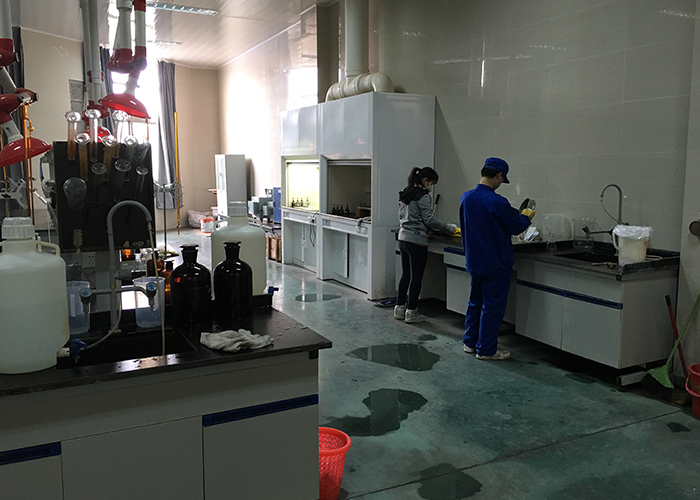
When purchasing diamond micron powder from a Chinese supplier, international buyers often ask: is there independent quality control? In China there are two authoritative state centers specializing in diamond micron powder and abrasive testing. Their reports are recognized worldwide as objective quality confirmation. This article covers both centers.
Why Buyers Need an Independent Report
An in-house COA is useful for operational batch management, but it is the factory own document and does not protect the buyer from systematic error. An independent state-lab report serves a different purpose: it confirms that the declared figures on granulometry, Fe/Ni/Co and magnetic impurities were reproduced in an accredited lab by standardized methods. CNAS accreditation means participation in the ILAC-MRA mutual recognition arrangement, while CMA enforces metrological requirements within China. For an importer this also matters at customs: a CMA/CNAS-stamped report speeds confirmation of declared composition and lowers the risk of declaration disputes.
Center 1: Henan Provincial Artificial Diamond Micropowder Quality Supervision and Testing Center
Located in Zhecheng county (Henan province) — at the heart of China's diamond industry. This is the only specialized diamond micron powder quality control center in the country. It is accredited by CNAS (China National Accreditation Service for Conformity Assessment) and CMA (China Metrology Accreditation), meaning international recognition of its testing.
Main tests:
- Particle size distribution (D10, D50, D90, distribution)
- Fe, Ni, Co content (atomic absorption spectrometry)
- Magnetic impurities (magnetic separation with weighing)
- Grain morphology (scanning electron microscopy)
- Bulk density
- Thermal stability (thermogravimetric analysis)
Center 2: National Abrasives and Grinding Tools Quality Inspection and Testing Center
Located in Zhengzhou city (capital of Henan province). This is a national center responsible for quality control of all types of abrasives in China, including diamond micron powders, silicon carbide, corundum and abrasive tools. Also CNAS and CMA accredited. Unlike the first center, which specializes only in diamond micron powders, this center tests all types of abrasives and can issue comprehensive reports.
Additional tests (beyond those listed):
- Chemical composition (full elemental analysis)
- Mohs hardness and microhardness
- Specific surface area (BET)
- Abrasive tool wear tests
Comparing the Two Centers
| Criterion | Zhecheng center | Zhengzhou center |
|---|---|---|
| Profile | diamond micron powder only | all abrasives and tools |
| Accreditation | CNAS + CMA | CNAS + CMA |
| Specialization | highest, only nationwide | broad scope |
| When to choose | micron powder disputes | comprehensive tests |
How to Get a Test Report
Both centers work with legal entities and individuals, including foreign clients. Procedure: send a sample (usually 50–100 g) to the center, specify the list of required tests, pay for services (cost depends on test list, usually 500–3000 RMB per package), receive a report in Chinese and English within 5–10 working days. The report contains precise measured values, test methods and conformity conclusion.
What Buyers Should Know
- Reports from these centers are third-party quality confirmation, not a manufacturer's certificate. This increases buyer trust.
- The report is tied to a specific sample batch. It does not guarantee quality of all future batches, but shows the manufacturer's level.
- For regular buyers, regular control can be arranged: every batch is tested at the center before shipment.
The ability to provide a state center report is an important signal of supplier seriousness. If a supplier refuses third-party control, it's a reason to question their product quality.
A Typical Buyer-to-Lab Workflow
In practice, independent testing is rarely ordered for every small batch — it is costly and slows shipment. A sensible workflow is as follows. At the start, before signing a contract, the buyer sends an incoming sample of the chosen grade to the Zhecheng center and gets a baseline report fixing the supplier starting level. Then, across the first three to four serial shipments, repeat tests are worthwhile to confirm batch-to-batch reproducibility. Only once stability is proven do you move to a sampling scheme: for example one run in five or once a quarter, plus an ad-hoc test whenever the supplier own COA deviates from its usual window. This ratio balances testing cost against quality confidence.
Trend: Independent Control Becomes the Norm
As requirements for PCD tools and semiconductor-substrate processing rise, buyers increasingly write independent testing into the contract rather than requesting it after the fact. This is because the cost of an error has grown: a missed batch with elevated iron can halt a wafer line or scrap costly tools. For the supplier, the readiness to promptly sample the current batch and accompany a shipment with an accredited center report has shifted from a value-added service to a baseline condition for export markets. On our side, we arrange sampling, delivery to either center and translation of the final report on request, rather than passing that work to the buyer.
Frequently Asked Questions
Do you provide COA?
Basic quality control is performed for every batch. Official Chinese state lab reports (Henan Micron Powder Quality Supervision Center in Zhecheng or National Abrasive Quality Inspection Center in Zhengzhou) are available on request. This requires additional time and cost.
What is the difference between the two centers?
The Zhecheng center specializes specifically in diamond micron powder (China only specialized center of this kind). The National center in Zhengzhou has broader accreditation (CNAS/CMA) and tests all abrasive types including diamond powders. Both centers issue official reports recognized for customs clearance.
How long does testing take?
Standard testing at the state center takes 5–10 business days. For urgent orders, expedited testing is available for an additional fee (3–5 days). We recommend ordering testing simultaneously with batch production to avoid shipping delays.
Three Document Types: What They Mean
Buyers often confuse three documents. The in-house COA is issued by the factory per batch for operational control, but is not independent. An accredited-center report is a one-off third-party test of a specific sample; it confirms the manufacturer level and helps at customs, but does not extend to the future. Type tests and quality-management certification (such as ISO 9001) describe the production organization, not a specific carat of powder. A competent procurement package usually combines all three: a system certificate for initial qualification, an independent report to fix the level, and recurring in-house COAs for batch-level operational control. Ask which of these the supplier will attach to the deal and match them to your application risk.
Related Articles
How to get a test report
- Specify grade and fraction — we sample and send to the center.
- Lead time: 5–7 business days for standard tests.
- Report is valid for that batch, with CMA/CNAS stamp.
Product inquiry
Fill in 4 fields — we reply within 1 business day. Or message us directly on VK / MAX.
Request a quote