China's export control on diamond micron powder raises many questions among Russian buyers: what exactly is restricted, whether a license is needed for a given grade, whether PCD blanks and finished tools can still be purchased legally, and how China's dual-use system differs from familiar Russian customs practice. Below is an overview, strictly educational and without legal commitments. All points are for reference only and must be verified against the latest official MOFCOM announcements and your own compliance review.
1. What Happened: Key Points of Announcement No. 55
On October 9, 2025, China's Ministry of Commerce and the General Administration of Customs jointly issued Announcement No. 55 imposing export controls on superhard materials. The measure took legal effect on November 8, 2025. It is grounded in China's Export Control Law, the Foreign Trade Law, and the Regulations on Export Control of Dual-Use Items.
The core logic is not a blanket ban but a shift of industrial raw diamond into a licensed-export regime. This means the goods have not automatically disappeared from trade: the exporter may apply and obtain a license if the end user and end use pass review. For the buyer the question is therefore not "allowed or not" but "which items, under which conditions, and through which procedure" can be exported.
2. What Is Controlled: Single-Crystal Diamond ≤50 μm
Announcement No. 55 primarily covers synthetic mono-crystalline diamond micron powder with a median particle size D50 of no more than 50 μm. "Mono-crystalline" and "fine fraction ≤50 μm" are the two key triggers. The threshold is read on D50 (the typical particle size in the batch), not on the largest oversized grain; this matters when reading the Certificate of Analysis (CoA), where D50 is reported on its own line.
Beyond micron powder, the announcement covers adjacent items: single crystals in the 50–500 μm range, diamond wire saws (wire diameter ≤45 μm, grain size ≤8 μm), and certain diamond grinding tools with defined parameters. Lab-grown jewelry diamonds are not covered — the control applies only to industrial diamond.
3. Dual-Use Licensing Logic: Code 2C902.a and HS 7105 10 20
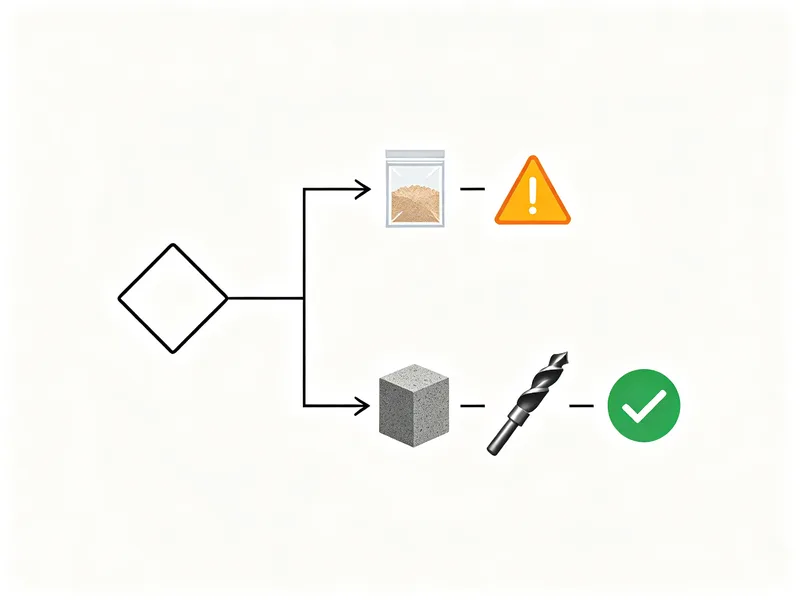
To understand the procedure it helps to separate two "dimensions" of the same goods. The first is China's export control, where a controlled item is tagged by an alphanumeric dual-use list code — here 2C902.a (diamond micron powder with D50 ≤ 50 μm). It is 2C902.a that determines whether an export license is required on the Chinese side.
The second dimension is the customs tariff nomenclature, where diamond powder is classified under HS code 7105 10 20 (powder of synthetic diamond). By itself 7105 10 20 neither "allows" nor "prohibits" anything — it is just a cargo classification. But when the same cargo also falls under 2C902.a, a dual-use export license is layered on top of customs clearance.
The practical rule of thumb: "tariff code 7105 10 20 + 2C902.a triggers" → check whether a license is required. The Chinese exporter files the application, attaching a technical description and end-user / end-use information. Review time and outcome depend on the competent authority and the completeness of the dossier.
4. Which Grades Need a License and Which Do Not
Based on publicly available information and market-participant clarifications, the licensing regime applies to the following items:
| Item | Parameters | Status |
|---|---|---|
| Mono-crystalline micron powder (2C902.a) | D50 ≤ 50 μm | License |
| Single crystal (2C902.b) | 50–500 μm | License |
| Diamond wire saw | wire ≤45 μm, grain ≤8 μm | License |
| PCD blanks / composites | sintered product | Usually no license |
| Diamond pastes | ready-to-use compound | Usually no license |
| Finished tools | mills, inserts, drills | Usually no license |
The "license / no-license" split is indicative. The exact list of thresholds and codes is updated continuously; before ordering any grade, check the current edition of the list and confirm the status with your supplier.
4.1 Current Enforcement Status (September 2026): Suspension Until 2026-11-10
As of September 2026, enforcement of Announcement No. 55 concerning micron powder ≤50 μm (code 2C902.a) is temporarily suspended by the Chinese side: until November 10, 2026 no export license is required and this grade can be supplied under normal procedure. What happens after 2026-11-10 has not been announced; monitor official MOFCOM publications.
Importantly, the announcement makes no distinction by powder purpose — neither "PCD grade" nor "ordinary industrial abrasive" is a basis for exclusion. The sole criterion is median particle size D50 ≤ 50 μm. All DIAMTECH products in the 0.25–20 μm range fall under this code, so within the window to 2026-11-10 they ship without a license, and after that — if control resumes — they will require a license.
Even when no license is needed or the item is outside the list, but its parameters are close to controlled ones, customs clearance still requires stating "not a dual-use item" and filling in the specific parameters — this is a declarant's obligation, not a ban.
5. Compliant Procurement Paths: PCD Blanks, Pastes, Finished Tools
If your production chain historically relied on loose mono-crystalline powder, and moving your own sintering onto a licensed track is impractical, three practical paths remain.
Path A — items outside licensing
Procuring PCD blanks, diamond pastes and finished tools generally requires no Chinese dual-use export license. This is the fastest and most lead-time-predictable option.
Path B — licensed grades via the supplier
For ≤50 μm grades under 2C902.a, the supplier obtains the export license itself; lead time grows by the approval period and requires early planning and buffer time.
Path C — shift to semi-finished and finished goods
Instead of loose micron powder, consider PCD composites or finished tools — products further down the value chain that typically sit outside raw-powder licensing.
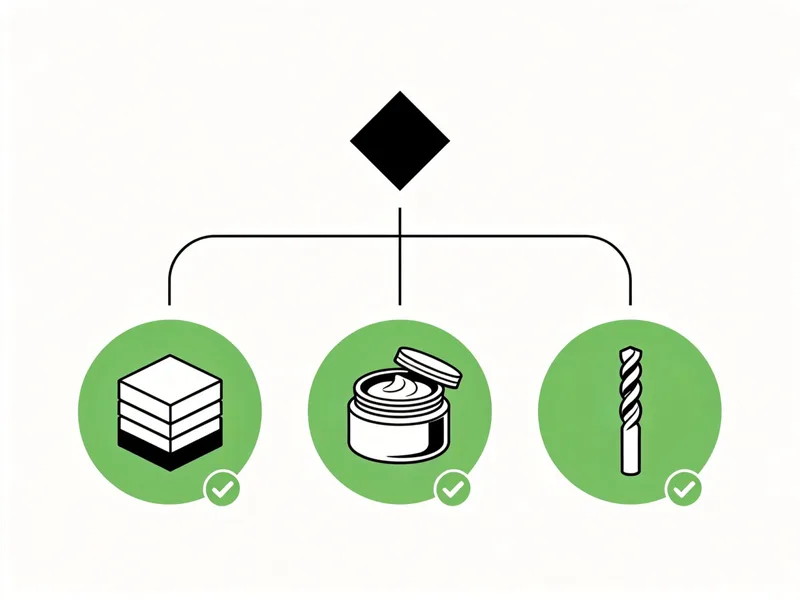
"No Chinese license" refers only to China's export control. Russian customs clearance and EAC declaration remain mandatory under EAEU rules — the two requirements neither overlap nor cancel each other.
6. Specific Advice for Russian Buyers
- Before requesting a quote, confirm with the supplier whether your grade falls under 2C902.a (D50 ≤ 50 μm). Rely on the D50 value from the CoA, not on a verbal description.
- Build the license-approval window into your production schedule; do not assume "business as usual" lead times.
- Do not confuse the Chinese export license with the Russian EAC declaration: they are two independent requirements applying to different sides of the border.
- Keep records of end use and end user: these data will be required with the license application.
- Plan raw-material buffers or the switch to PCD/paste in advance, not when a line stops.
7. The Russia–China Information Gap: What Russian Buyers Often Miss
Some mistakes arise not from the announcement itself but from the difference between the two countries' customs and control systems.
- "It cleared China's border, so it must be fine." In fact the Chinese side checks the license on export, while EAC and duties are checked by the Russian side on import. One side's clearance does not waive the other's requirements.
- Routing via a third country goes unnoticed. Attempts to bypass the license via transit or re-export carry sanctions and reputational risk and are not a lawful route.
- Knowing only 7105 10 20. Many buyers look only at the tariff code and are unaware of the internal control code 2C902.a. It is the pairing of "tariff code + control code" that determines whether a license is needed.
- Underestimating processing depth. A PCD blank is already a further-processed product; shifting the product mix "powder → PCD → tool" is itself lawful and usually stable on lead time.
This material is strictly educational and informational and is not legal, customs or tax advice. All points are provided "as is" and must be verified against the latest official MOFCOM announcements and your own compliance review. We make no guarantees regarding specific grades, timelines or licensing decisions.