PDC (Polycrystalline Diamond Compact) — a polycrystalline diamond layer sintered onto a tungsten carbide substrate at 5–6 GPa and 1500–2000°C. PDC bits dominate oil & gas drilling (about 70% of the world's bit fleet) and increasingly replace roller cone bits in mining drilling. PDC bit life and drilling speed are 60–70% determined by the quality of diamond powder used in PDC manufacturing.
Key Diamond Powder Requirements for PDC
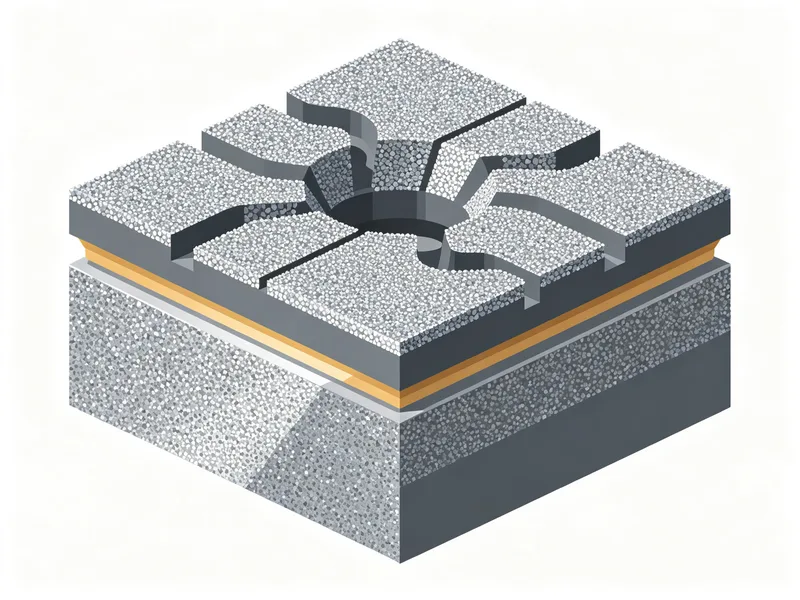
1. Grain Size: 2–30 μm Depending on Application
Diamond grain size in PDC determines the balance between wear resistance and impact toughness:
| Grain size | Wear resistance | Impact toughness | Application |
|---|---|---|---|
| 2–5 μm (fine-grained) | Very high | Low (brittle) | Oil & gas drilling, soft–medium rocks, high abrasiveness |
| 10–20 μm (medium-grained) | High | Medium | Universal, medium–hard rocks |
| 20–30 μm (coarse-grained) | Medium | High | Mining drilling, hard rocks, high impact load |
| Bimodal (2–5 + 10–15 μm) | Very high | High | Premium PDC, complex drilling conditions |
Bimodal distribution (mix of fine and coarse grains) — a modern trend in PDC manufacturing. Fine grains fill gaps between coarse grains, increasing diamond layer density and wear resistance, while coarse grains provide impact toughness. This allows PDC with both high wear resistance and high impact toughness — something impossible with monomodal distribution.
2. Strength (TI) and Thermal Toughness (TTI)
TI (Toughness Index) — measured per ASTM B679: a fixed amount of diamond is placed in a steel cylinder with balls, subjected to vibration, then the percentage of intact grains is measured. PDC requires TI ≥ 60% (high-strength SMD grade diamond).
TTI (Thermal Toughness Index) — diamond is pre-heated to 1100°C in inert atmosphere, then TI is measured. TTI shows how much strength diamond retains after thermal shock — critical for PDC, since drilling temperatures at the cutting edge can reach 700–900°C. PDC requires TTI ≥ 50% (TTI/TI ratio ≥ 0.8).
3. Purity: ≤ 65 ppm Metal Impurities
During PDC sintering at 1500–2000°C, metal impurities (Fe, Ni, Co) in diamond grains:
- Catalyze reverse diamond-to-graphite transformation at grain boundaries, weakening diamond-to-diamond bonds
- Create stress zones due to thermal expansion coefficient differences, leading to microcracks
- Reduce PDC wear resistance by 2–3 times
Standard PDC requires total Fe+Ni+Co ≤ 65 ppm. High-quality PDC (premium segment) — ≤ 30 ppm. Internal metal inclusions (inside crystals) cannot be removed by purification — they are determined by the quality of the original synthesized diamond.
Rock Classification and PDC Selection
| Rock type | Hardness (Mohs) | Abrasiveness | PDC grain size |
|---|---|---|---|
| Clay, sand, chalk | 1–3 | Low | 10–20 μm |
| Limestone, dolomite, shale | 3–5 | Medium | 5–15 μm |
| Sandstone, granite, syenite | 6–7 | High | 2–10 μm |
| Basalt, gabbro, quartzite | 7–8 | Very high | 2–5 μm (bimodal) |
| Iron ore, chromite | 5–7 | Very high | 10–20 μm (impact-resistant) |
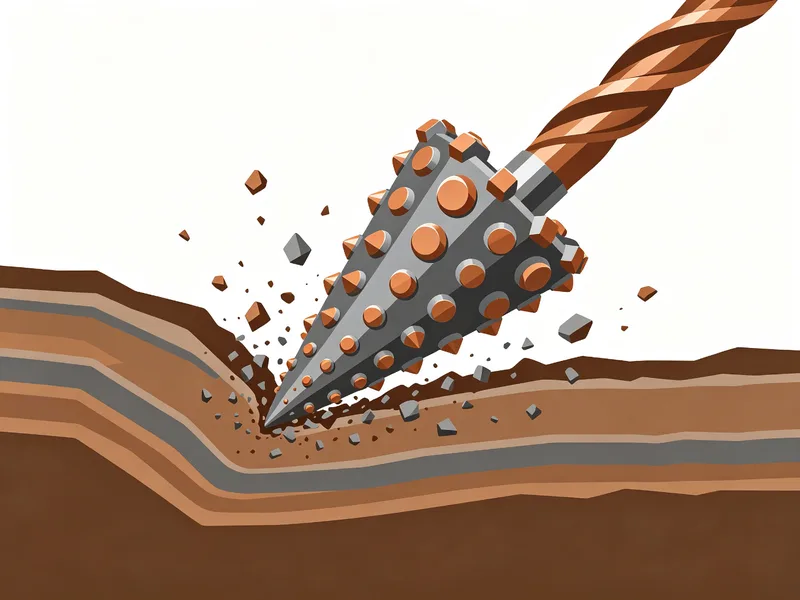
PDC Wear Mechanism and Role of Diamond Powder
PDC wears by several mechanisms, each dependent on diamond powder properties:
- Abrasive wear — diamond grains gradually wear against rock. Determined by diamond strength (TI): high TI = slow wear.
- Thermal wear — at high temperature (≥700°C) diamond oxidizes and graphitizes. Determined by thermal toughness (TTI) and purity: low impurities = higher graphitization onset temperature.
- Impact fracture (chipping) — when passing through layered formations or when the bit gets stuck, PDC experiences impact loads leading to cutting edge chipping. Determined by grain size: coarse grains = higher impact toughness.
- Grain pull-out — individual diamond grains fall out of the PDC matrix due to weak diamond-to-diamond bonds. Determined by purity and sintering conditions: low impurities = strong diamond-to-diamond bonds.
PDC Sintering Process and Its Impact on Powder Selection
PDC is manufactured in high-pressure high-temperature (HPHT) presses. A typical sintering cycle:
- Loading: diamond powder is placed onto a WC-Co substrate in a graphite container.
- Pressure ramp to 5–6 GPa over 10–15 minutes.
- Heating to 1500–1600°C over 2–5 minutes. Cobalt from the substrate melts and "infiltrates" the diamond layer, bonding the grains.
- Hold 60–120 seconds at peak parameters.
- Pressure release and cooling over 3–5 minutes.
Two key powder requirements follow from this cycle. First, grains must withstand 5–6 GPa without breaking — hence the TI ≥ 60% requirement. Second, surface purity is critical: metal impurities (Fe, Ni) catalyze graphitization at 1500°C, destroying diamond-to-diamond bonds. Powder with Fe+Ni+Co > 100 ppm yields PDC with reduced wear resistance.
Cobalt Leaching and PDC Thermal Stability
When drilling at great depths, temperature at the cutting edge can reach 700–900°C. At this temperature, cobalt (the metal binder in PDC) expands 3–4 times more than diamond, causing microcracks and catalytic graphitization. To extend PDC life in hot conditions, chemical cobalt leaching from a 0.3–0.5 mm surface layer is used:
- PDC is immersed in a hot acid mixture (HNO₃ + HCl) for 4–12 hours.
- Cobalt is leached from intergranular gaps, the diamond skeleton remains.
- Leached PDC withstands temperatures up to 1100°C without catastrophic failure (regular PDC — up to 700–750°C).
Leached PDC is used for drilling hot wells and through basalt formations. It costs 30–50% more than regular PDC but pays back with 50–100% longer life. Manufacturing leached PDC requires even cleaner powder (Fe+Ni+Co ≤ 30 ppm), since residual metal impurities are not fully removed from the diamond skeleton.
Incoming Powder QC for PDC: Checklist
Before putting powder into production, every batch must pass incoming inspection. Minimum test set:
| Parameter | Method | Acceptance |
|---|---|---|
| D50 | Laser diffraction (ISO 13320) | ±10% of nominal |
| D90/D10 | Laser diffraction | ≤ 2.5 (narrow) |
| Fe+Ni+Co | ICP-OES | ≤ 65 ppm (≤30 ppm premium) |
| TI | ASTM B679 | ≥ 60% |
| TTI | ASTM B679 + 1100°C heating | ≥ 50% |
| Particle shape | SEM, 5000× | Cubic/intermediate, no needles |
| Moisture | LOI at 110°C | ≤ 0.3% |
PDC Cutter Geometry and Its Influence on Powder Selection
A PDC cutter on the bit has not only a diamond layer thickness (usually 1.5–2.5 mm) but also a specific rake face geometry. This determines the load the diamond powder experiences during drilling:
- Positive rake (-10° to -20°) — reduces cutting force but increases impact loads on shear. Requires powder with high TI (≥70%) and bimodal distribution for wear/impact balance.
- Negative rake (+10° to +20°) — strengthens the cutting edge for hard rocks but increases heat generation. Requires powder with high TTI (≥55%) and lower Co impurity (≤30 ppm) to withstand temperature.
- Dome/crusher profile — used in compression drills for abrasive formations. Requires very coarse and strong diamond (20–30 μm, TI ≥ 80%), since the wear mechanism is impact deformation, not cutting.
Typical Mistakes in PDC Powder Selection
- Choosing solely by price per carat. Cheap powder with TI 50% and 150 ppm impurities can reduce PDC life by 2–3 times, and ultimately each meter of drilling costs more. Calculate cost per meter drilled, not per carat.
- Ignoring TTI. The customer looks only at TI 70% but doesn't ask TTI. As a result, PDC works at the surface where temperature is 500°C and fails in a few hours. TTI/TI must be ≥ 0.8 for hot wells.
- One powder for all drilling conditions. A universal PDC powder does not exist. Soft clays and basalt require completely different compositions. One supplier cannot cover all your needs with a single SKU.
Key conclusion: PDC is a compromise material. It is impossible to simultaneously maximize wear resistance, thermal stability and impact toughness. Diamond powder selection (grain size, TI, TTI, purity) is a conscious choice of priorities based on drilling conditions. Bimodal compositions and PDC alloying (SiC, WC additives) — modern directions that allow shifting this compromise for the better.
Bimodal Compositions in Detail
A bimodal distribution combines fine (2–5 μm) and coarse (10–15 μm) grains in one diamond layer. Fine grains fill voids between coarse ones, raising packing density and wear resistance, while coarse grains provide impact toughness. In practice, in hard abrasive formations bimodal PDC gives 20–30% longer life than monomodal of the same mean grit at comparable drilling speed. The drawback is stricter mixing uniformity requirements during PDC manufacturing.