PCD (Polycrystalline Diamond) and PDC (Polycrystalline Diamond Compact) are modern superhard materials combining the unique properties of diamond with the strength and toughness of cemented carbide. They have revolutionized cutting, drilling and hard material processing.
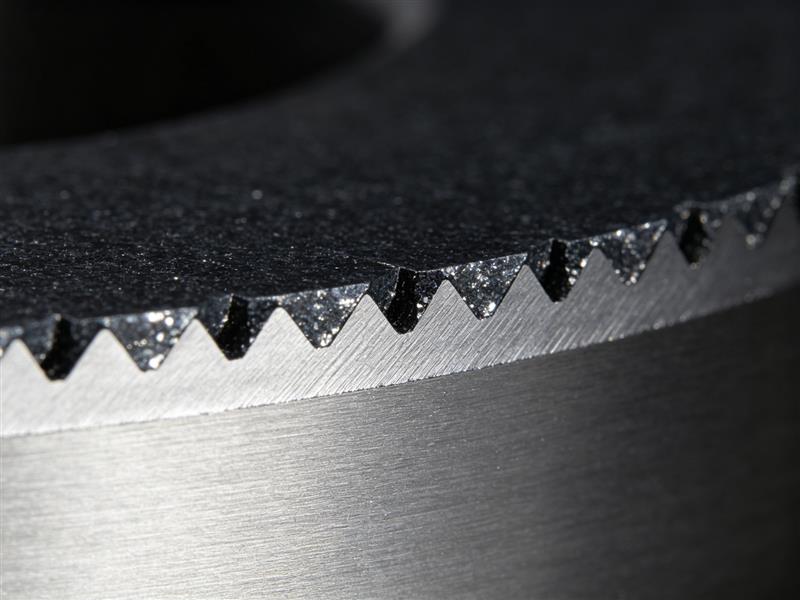
What is PCD?
PCD is a polycrystalline diamond material consisting of many small diamond grains sintered together into a single whole with a metallic binder.
PCD structure:
- Diamond grains (0.5–50 μm) — 85–95% by volume
- Cobalt (Co) or other metal binder — 5–15% by volume
- Grains are connected to each other by direct diamond-to-diamond bonds
Key difference from single crystal:
- Single crystal diamond has anisotropy (different properties in different directions) and cleavage planes
- PCD is isotropic — properties are the same in all directions
- PCD has no cleavage planes, so it is tougher and more resistant to impact loads
- PCD can be manufactured as plates of any shape and size
What is PDC?
PDC (Polycrystalline Diamond Compact) is a composite material consisting of two layers sintered into a single whole:
- Top layer — PCD (polycrystalline diamond), 0.5–2 mm thick
- Bottom layer — tungsten carbide based cemented carbide (WC-Co), 2–10 mm thick
Structure principle:
- Diamond layer provides high hardness, wear resistance and cutting properties
- Cemented carbide substrate provides strength, toughness and brazing/fastening capability
- Two layers are sintered into one whole during HPHT, forming a strong transition layer
PDC advantages over pure PCD:
- PCD is brittle and difficult to fasten to tools
- PDC can be brazed, welded, screw-fastened — like ordinary cemented carbide
- Cemented carbide substrate absorbs impact loads, preventing chipping of the diamond layer
- PDC cost is lower than solid PCD of the same thickness
PCD/PDC Production Technology
PCD and PDC are produced by the HPHT (High Pressure High Temperature) method, similar to single crystal synthesis, but with important differences — not growth of individual crystals occurs, but sintering of a grain mass into a single composite.
Stage 1: Charge Preparation
- For PCD: diamond powder of required grain size (usually a mixture of several fractions for dense packing) + cobalt powder (binding agent). Thorough mixing for uniform distribution.
- For PDC: a cemented carbide substrate (WC-Co) is placed at the bottom of the container, diamond powder with cobalt additive is poured on top. Cobalt from the cemented carbide substrate also diffuses into the diamond layer during sintering.
Stage 2: Container Assembly
- Charge is placed in a niobium or tantalum capsule (protection from external environment)
- Capsule is placed in a graphite heater
- Entire assembly is placed in a pyrophyllite matrix (transmits pressure, provides electrical insulation)
Stage 3: HPHT Sintering
Process parameters:
- Pressure: 50–70 kbar (5–7 GPa) — higher than for single crystal synthesis
- Temperature: 1400–1600 °C
- Holding time: 3–30 minutes (depending on size and thickness)
- Environment: inert (protected by capsule)
What happens during sintering:
- Cobalt melts and impregnates the space between diamond grains
- Under high pressure and temperature, carbon dissolution-precipitation occurs
- Direct diamond-to-diamond bonds form at grain boundaries
- Grains coalesce into a single polycrystalline monolith
- For PDC: diffusion bonding of diamond layer with cemented carbide substrate occurs through a transition layer
Key point: direct diamond-to-diamond bonds form only at pressures above 5 GPa. At lower pressures, grains simply sinter through metallic binder (as in ordinary cermet materials), and the material does not possess the unique properties of PCD.
Stage 4: Post-Sintering Processing
- Extraction: assembly disassembly, removal of capsule and matrix residues
- Purification: removal of graphite residues and foreign inclusions (acid treatment)
- Quality control:
- Ultrasonic testing — detection of internal cracks and delaminations
- Hardness and density measurement
- Microstructural analysis — optical and electron microscope
- Layer bonding strength test (for PDC)
- Mechanical processing:
- Cutting to required dimensions (laser or EDM)
- Grinding and lapping of working surfaces
- Cutting edge sharpening
- Brazing to tool body
PCD/PDC Properties
| Property | PCD | PDC | Diamond single crystal | WC-Co carbide |
|---|---|---|---|---|
| Hardness, GPa | 50–80 | 50–80 (diamond layer) | 70–100 | 15–20 |
| Density, g/cm³ | 3.8–4.2 | 10–14 (with substrate) | 3.52 | 14–15 |
| Flexural strength, MPa | 800–1200 | 1500–2500 | 300–600 | 2000–3000 |
| Thermal conductivity, W/(m·K) | 200–500 | 200–500 | 600–2500 | 80–120 |
| Impact resistance | Low | Medium | Very low | High |
| Brazing capability | No | Yes | No | Yes |
PCD/PDC Applications
1. Cutting Tools (PCD Inserts)
- Turning and milling tools for non-ferrous metal processing (aluminum, copper)
- Processing of carbon composites (CFRP), fiberglass, ceramics
- Wood and wood composite processing (MDF, particleboard, plywood)
- Cutting speed 10–100 times higher than carbide tools
- Tool life 50–200 times longer
2. Drill Bits (PDC Cutters)
- PDC drill bits for oil and gas drilling — main bit type for soft and medium formations
- PDC cutters — cylindrical PDC elements 8–19 mm diameter, brazed onto bit body
- PDC bit service life 5–10 times longer than roller cone bits
- Drilling speed 30–50% higher
3. Exploration Core Bits
- Impregnated core bits — diamond powder distributed throughout the bit
- Surface-set core bits — PCD elements fixed on the bit face
- For drilling hard and abrasive formations (granite, basalt, quartzite)
4. Other Applications
- Diamond wire saws for stone cutting
- Grinding and snagging wheels
- Pump and valve parts for abrasive media
- Wear-resistant coatings and overlays
Interesting Facts
- PCD was first synthesized in the 1960s by De Beers (brand name Syndite).
- First industrial application of PCD — drill bits for the oil and gas industry, which revolutionized drilling speed.
- Modern PCD tools operate at cutting speeds up to 5000 m/min.
- One PDC cutter can process up to 100 km of aluminum surface without regrinding.
- For PCD production, diamond powder of different grain sizes is used: fine-grained (0.5–2 μm) for finishing, coarse-grained (10–50 μm) for roughing.
- Direct diamond-to-diamond bonds in PCD form only at pressures above 5 GPa — at lower pressures, grains simply sinter through metallic binder.
Typical PCD Defects and Their Causes
- Delamination between diamond layer and WC substrate — often due to CTE mismatch or insufficient sintering pressure.
- Macropores in the diamond layer — result of poor powder dispersion or overly broad particle-size distribution.
- Catalytic graphitization — high Fe/Ni/Co content in the starting powder.
Most of these defects are introduced at the powder-selection stage, not during pressing. Therefore incoming inspection (ICP, laser particle sizer, SEM) is critical.
The Temperature Limit of PCD
When heated above 700–800°C in oxygen, the diamond layer of PCD begins to oxidize, and the cobalt binder expands faster than diamond, causing microcracking. Therefore PCD tools must not overheat: when turning steel, intensive coolant is required; when drilling, flushing fluid is mandatory. For high-temperature operations there are modifications with leached cobalt binder (leached PCD) that withstand up to 1100°C, but they are more expensive and more brittle.
When selecting a PCD blank, always specify: diamond layer thickness, WC substrate grade, thermal resistance (standard ~700°C or leached ~1100°C), and working diameter. These parameters determine the compact's applicability in a given operation.
Diamond–Diamond Bond Strength
The mechanical properties of PCD/PDC are set not only by grain size but by the strength of inter-grain bonding. In PCD diamond grains sinter directly (diamond-to-diamond bond); in PDC, via a thin cobalt layer from the substrate. Metal impurities on grain surfaces catalyze graphitization and weaken this bond, so purity directly affects impact toughness and composite life. Controlling impurities (Fe+Ni+Co ≤ 65 ppm, premium ≤ 30 ppm) is a mandatory condition for stable quality.