Choosing the right diamond micron powder grain size is the first and most important decision when purchasing. The wrong grain size leads to reduced productivity, powder waste and poorer surface quality of machined parts. This guide will help you understand the W5–W40 marking and choose the optimal option for your production.
What does the W marking mean?
The W marking (from width) indicates the maximum grain size in micrometers. W5 means 99% of grains do not exceed 5 micrometers, W10 — 10 micrometers, and so on. The smaller the number, the finer the powder and the cleaner the surface after processing, but the lower the material removal rate.
W5 — finishing grain size
W5 is the finest standard grain size in our range. Used for final finishing of PCD blanks, polishing carbide tools and processing optical components. Provides surface roughness Ra 0.05–0.1 μm. Material removal rate is low, so W5 is usually applied at the final processing stages.
W10 — universal grain size
W10 is the most popular size, balancing removal rate and surface finish. Suitable for most PCD tool sharpening operations, ceramic and glass processing. Provides Ra 0.1–0.2 μm. If you are unsure which grain size to choose, start with W10.
W20 and W40 — coarse grain sizes
W20 is used for rough sharpening, large stock removal and natural stone processing. W40 — for the coarsest operations where maximum removal rate is important and surface finish is not critical. Both sizes are often used at early processing stages with subsequent transition to finer W10/W5.
How to choose: practical tips
- For PCD sintering: W10–W20 for base layer, W5–W10 for top layer
- For tool sharpening: start with W20, then W10, finish W5
- For polishing: W5 or finer on request
- Not sure — order a trial batch from 1 kg
Rule of thumb: always start with coarser grain size and gradually transition to finer. This saves time and powder.
Quick fraction selection
- Carbide tool sharpening: W10–W20.
- Optics and ceramic polishing: W3.5–W7.
- Rough grinding: W28–W40.
- PCD sintering: W5–W10, narrow distribution.
Why Grain Size Controls Both Speed and Finish
During grinding and polishing, every diamond grain acts as a micro-cutter removing micro-chips. The larger the grain, the deeper it cuts into the part and the more material it removes per pass, but the deeper the scratches it leaves and the coarser the roughness. The finer the grain, the finer the scratches and the cleaner the surface, but the lower the removal rate. In real production, therefore, you do not pick one "ideal" grain size but build a route from coarse to fine, each step wiping out the scratches of the previous one.
The Step-Down Rule: How Much Finer Each Next Step Should Be
For an effective transition from coarse to fine, the ratio between adjacent steps should generally not exceed 4–10× by grain size (D50). Jumping straight from W40 to W5 means the fine grains simply sink between the deep W40 scratches and cannot correct them — wasting time and powder. A typical rough-to-finish route is W40 → W20 → W10 → W5. Intermediate W7 or W14 are added when a very high finish is required or when machining hard, brittle materials (ceramics, sapphire, silicon carbide).
Why Distribution Matters as Much as Grain Size
Two batches with the same D50 (e.g. both W10) can behave differently. A narrow distribution (small D90/D10 spread) means nearly all grains cut together and leave scratches of uniform depth — predictable finishing. A broad distribution yields stray oversized grains that locally damage the surface while the rest is still leveling it. For finishing work (optics, PCD, SiC substrates), demand a narrow distribution and D95 control, not just D50.
Application Selection Table
| Application | Step route | Special requirement |
|---|---|---|
| PCD tool sharpening | W20 → W10 → W5 | Low impurities, blocky shape |
| Optics and ceramic polishing | W7 → W5 | Narrow distribution, magnetic impurities <0.1% |
| Silicon, sapphire cutting | W14 → W10 → W5 | D95 control |
| Natural stone processing | W28 → W20 | Bulk density, price |
| Carbide tools | W10 → W5 | Grain strength |
Frequently Asked Questions
Can I use W5 directly and skip the coarse steps?
Technically yes, but economically poor: W5 removes material very slowly, so rough stock removal takes many times longer and consumes more powder. The coarse step saves time precisely on removal volume, while the fine step delivers surface quality.
Why are there still scratches after W10?
Most likely the batch contains oversize particles (a D95 outlier) or you stepped down too abruptly. Check the particle-size report and add an intermediate W14 or W7 step before upgrading to a finer grade.
Which size should I order if I am just starting the process?
Take a trial batch of the universal W10 from 1 kg, plus W20 and W5 for roughing and finishing. That builds a full route on a small volume. MOQ is from 1 kg; standard W5/W10/W20 ship from stock in 48h.
Conclusion
Choosing grain size is choosing the trade-off between productivity and surface quality. Build a coarse-to-fine route, keep the step ratio at 4–10×, control the distribution, and do not chase a single "universal" fraction. That keeps tool life, part finish and budget in order.
When Standard W5 Is Not Enough
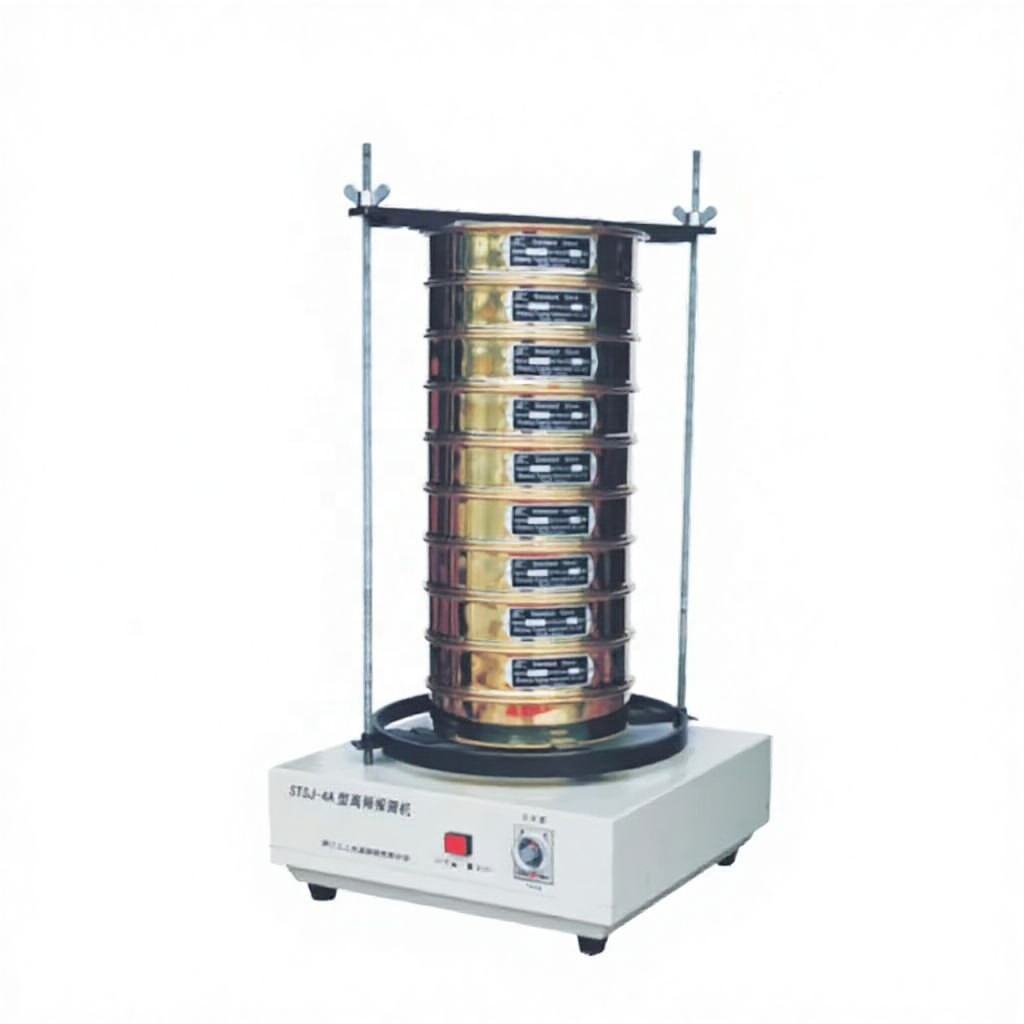
For ultra-precise work — final polishing of optical elements, mirror-class diamond tool finishing, semiconductor substrate processing — standard W5 may be insufficient. Then you order finer: W3.5, W2.5, W1.5, W1 and even W0.5. These fractions approach the nanoscale; they work not on bulk removal but on smoothing the micro-relief. They are harder to classify, so control is done on a laser granulometer per ISO 13320:2020 and, when needed, confirmed by SEM micrographs. Such fractions are ordered to task, as ultra-fine stock may not be held. Custom lead time is 3–7 days.
Three Common Mistakes When Sizing
- Choosing by price per gram without checking distribution. Cheap powder with a broad distribution wipes out the saving through scrap and lost time.
- Treating the same D50 as the same product. Suppliers interpret the W10 mark differently — compare the numeric D10/D50/D90 from the report, not the index.
- Trying to replace a coarse step with long fine-grit work. Productivity drops and the target roughness still eludes because the surface "remembers" the coarse cuts.
Short version
In short: W40–W28 roughing, W20–W14 semi-finish, W10 the workhorse, W7–W5 the finish, and W3.5 and finer a separate case for ultra-precise work. Match steps to the material and target roughness, always ask for a distribution report, and start with a trial batch from 1 kg. One trial run tells you whether the fraction suits your equipment before you move to steady supply from 1 kg.
Product inquiry
Fill in 4 fields — we reply within 1 business day. Or message us directly on VK / MAX.
Request a quote