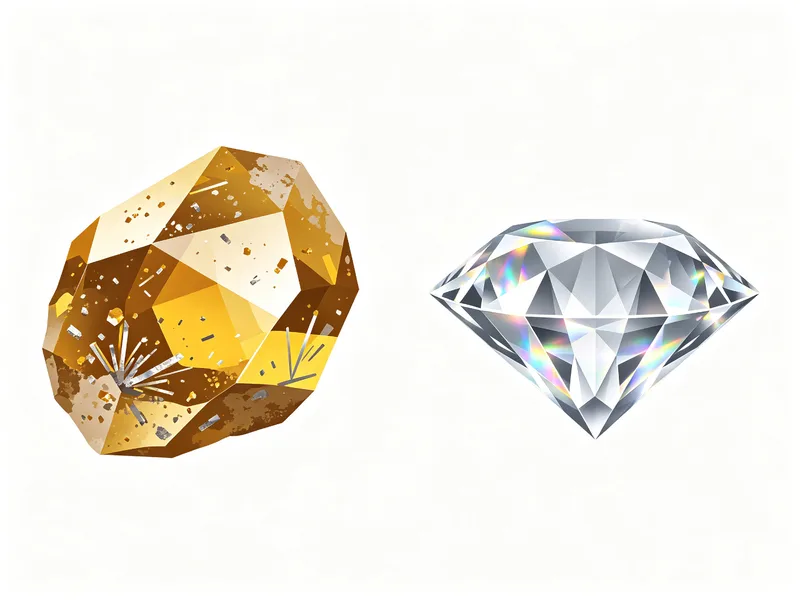
Diamond and brilliant are the same substance from a chemical point of view: crystalline carbon (C) with a cubic lattice. The difference lies in quality, size, transparency and purpose. A brilliant is a cut gem-quality diamond intended for jewelry. Industrial diamond is technical diamond used in tool manufacturing, abrasives, electronics and other industries.
Basic Physical Properties Comparison
| Parameter | Diamond (industrial) | Brilliant (gem-quality) |
|---|---|---|
| Chemical formula | C (carbon) | C (carbon) |
| Crystal system | Cubic | Cubic |
| Mohs hardness | 10 | 10 |
| Knoop hardness, GPa | 57–104 | 70–100 |
| Density, g/cm³ | 3.50–3.53 | 3.515–3.525 |
| Refractive index | 2.40–2.42 | 2.417 |
| Dispersion | 0.044 | 0.044 |
| Thermal conductivity, W/(m·K) | 200–2000 | 600–2500 |
| Melting point, °C | ~4000 (at high pressure) | ~4000 (at high pressure) |
| Chemical resistance | Inert to acids and alkalis | Inert to acids and alkalis |
Parameter Comparison of Lab-Grown and Natural Diamonds
Lab-grown (synthetic) diamonds are practically indistinguishable from natural diamonds in their physicochemical properties. Below is a detailed comparison of key parameters.
| Property | Lab-Grown Diamond | Natural Diamond | Difference |
|---|---|---|---|
| Chemical composition | Carbon C | Carbon C | None |
| Refractive index | 2.42 | 2.42 | None |
| Relative density | 3.52 | 3.52 | None |
| Dispersion | 0.044 | 0.044 | None |
| Hardness | 90 GPa | 90 GPa | None |
| Thermal conductivity | 2×10³ W/(m·K) | 2×10³ W/(m·K) | None |
| Thermal expansion | 0.8×10⁻⁶ K⁻¹ | 0.8×10⁻⁶ K⁻¹ | None |
| Light transmission | Deep UV to far IR | Deep UV to far IR | None |
| Electrical resistivity | 10¹⁶ Ω·cm | 10¹⁶ Ω·cm | None |
| Compressibility | 8.3×10⁻¹³ m²/N | 8.3×10⁻¹³ m²/N | None |
The difference between natural and lab-grown diamonds is like the difference between river ice and refrigerator ice — the latter is simply produced by industrial means that shorten the diamond formation time.
Key Differences
1. Transparency and Color
Brilliant:
- Fully transparent in visible spectrum
- Colorless (D-Z by GIA) or fancy color (yellow, pink, blue, green, red)
- No visible inclusions (or minimal amount)
- Clarity graded by GIA scale: FL, IF, VVS1, VVS2, VS1, VS2, SI1, SI2, I1, I2, I3
Industrial diamond:
- Opaque or semi-transparent
- Yellow, gray, green or black color (due to nitrogen, nickel, cobalt impurities)
- Contains metallic catalyst inclusions (Ni, Fe, Co)
- Transparency is not a quality criterion
2. Size and Shape
Brilliant:
- Size: usually from 0.01 to 100+ carats (1 carat = 0.2 g)
- Shape: regular crystals (octahedron, rhombic dodecahedron)
- After cutting: round, princess, emerald, oval, pear and other shapes
- Weight is the most important pricing factor
Industrial diamond:
- Size: from 0.1 μm (micron powder) to 5 mm (large crystals)
- Shape: irregular crystals, crushed particles
- Used as powder, paste, suspension or sintered composite (PCD)
- Weight specified in carats or kilograms, price per carat significantly lower
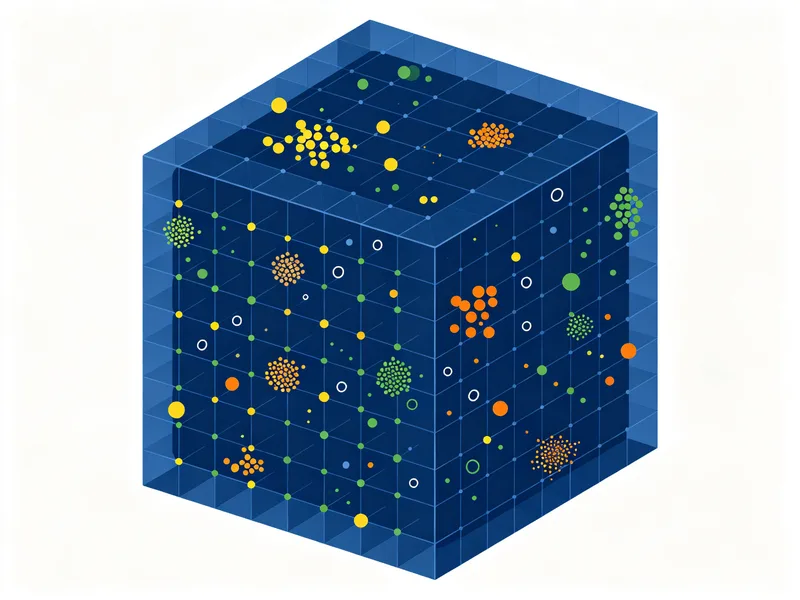
3. Impurities and Purity
Brilliant:
- Purity: 99.95–99.99% carbon
- Impurities: nitrogen (yellow color), boron (blue color), hydrogen
- No metallic inclusions
- Each stone is certified (GIA, HRD, IGI)
Industrial diamond:
- Purity: 99.0–99.9% carbon (after purification)
- Impurities: metallic catalyst (Ni, Fe, Co), graphite, other carbon forms
- For micron powder after acid purification, purity ≥ 99.9%
- Certified by technical parameters (grain size, strength, shape)
4. Origin and Production
Brilliant:
- Natural: formed in Earth's mantle at 150–200 km depth, 4.5–6 GPa pressure, 900–1300 °C temperature over 1–3 billion years
- Synthetic gem-quality: by CVD method (chemical vapor deposition)
- Mining: kimberlite pipes, alluvial deposits
- World production: ~150 million carats per year (natural)
Industrial diamond:
- Synthetic: by HPHT method (high pressure, high temperature) — 90% of production
- Synthetic: by CVD method — for special applications
- Natural industrial: bort (non-gem diamond) — ~10%
- World production: ~5 billion carats per year (synthetic)
- China produces >90% of world synthetic diamond volume
5. Thermal and Electrical Conductivity
Brilliant:
- Thermal conductivity: 600–2500 W/(m·K) (depending on purity and orientation)
- Electrical conductivity: dielectric (resistivity >10¹⁶ Ω·cm)
- Exception: blue diamonds (boron impurity) — semiconductors
Industrial diamond:
- Thermal conductivity: 200–2000 W/(m·K) (lower due to impurities)
- Electrical conductivity: may be conductive due to metallic inclusions
- PCD composites: thermal conductivity 200–500 W/(m·K)
Cost Comparison
| Category | Price per carat | Note |
|---|---|---|
| Brilliant 1 carat, VS1, G | $4000–$8000 | Gem quality |
| Brilliant 0.1 carat | $200–$500 | Small gem-quality |
| Industrial diamond (large) | $0.5–$5 | For tools |
| Diamond micron powder W10 | $0.1–$0.5 | For grinding |
| Diamond micron powder W1 | $0.5–$2 | For polishing |
| PCD blank | $2–$20/carat | For cutting tools |
Interesting Facts
- The word "brilliant" comes from French "brillant" — "shining". This name appeared in the 17th century with the invention of the ideal round cut.
- Industrial synthetic diamond was first produced in 1954 by General Electric. Now synthetic diamonds account for 98% of the industrial market.
- The largest cut brilliant in the world — Cullinan I (Star of Africa), weighs 530.2 carats, is in the British monarch's scepter.
- In industry, diamond is used 100+ times more by volume than in jewelry, but costs 1000+ times less per carat.
- CVD synthetic brilliants are physically and chemically indistinguishable from natural ones — only expensive laboratory equipment can determine their origin.
- Industrial diamond micron powder can be so fine (W0.5 = 0.5 μm) that particles are 100 times thinner than human hair.
Why Industrial Diamond Is Unsuitable for Jewelry
HPHT synthesis, which underpins almost all industrial diamond, produces crystals with high metallic-inclusion content (Fe/Ni/Co), growth defects, and color (yellow, brown, sometimes gray). For tools and grinding powder these defects are not critical — they are even useful: inclusions increase brittleness and ease crushing into micron powder. But for a gemstone, any inclusion is visible to the eye or under a 10× loupe and instantly lowers the gemological clarity grade.
Parallels and Differences in Requirements
| Criterion | Gem diamond | Industrial diamond |
|---|---|---|
| Size | ≥ 0.01 ct, faceted | 1 μm – 1 mm, powder/grit |
| Clarity | VVS–SI | inclusions allowed, up to 500 ppm |
| Color | D–J colorless | any, color irrelevant |
| Hardness | hardness as a fact (10 on Mohs) | the key performance property |
| Price per carat | $500 – 50 000+ | $0.1 – 5 (powder) |
Conclusion: these are two different markets with different requirements and a 1,000–100,000× price difference per unit mass. DIAMTECH supplies industrial micron powder for tools, PCD sintering, and polishing — not gemstones.
History: How Diamond Became Industrial
Until the 1950s, all diamond in the world was natural, mining was controlled by a few companies, and prices were high. In 1954, General Electric first achieved HPHT diamond synthesis in the laboratory, and by the 1960s industrial production of synthetic diamond was established in the USA, Sweden, and the USSR. By the 1970s, synthetic diamond had displaced natural diamond from most industrial uses — not because it is superior in properties, but because it is cheaper, more consistent, and independent of mines.
Today, over 95% of all diamond consumed by world industry is synthetic. China (mainly Henan province) produces about 80% of this volume. Natural diamonds remain in two niches: the jewelry market and specialized tools requiring unique morphology.
Conclusion for the Reader
If you were looking to "buy diamonds" — this site is not for you. But if you need diamond micron powder for tools, PCD sintering, optics or ceramic polishing — you are in the right place. Industrial diamond is not "low-quality diamond" but a separate product optimized for wear, not sparkle. Its 10000 HV hardness, up to 700°C thermal stability, and reproducible batch quality make it irreplaceable in modern manufacturing.
The key distinction to remember: gem diamonds are valued for rarity and clarity, while industrial diamond is valued for hardness and consistency. The same chemical element (carbon) operates in two completely different economies.
Diamond as Material vs Brilliant as Cut
Diamond is crystalline carbon with a cubic lattice (sp³ hybridization), the hardest known material. "Brilliant" is not a separate substance but a cut shape (usually 57 facets, "round brilliant") applied to gem diamonds. Industrial micron powder is diamond as an abrasive material — it has no brilliant cut and is not gem-grade.
| Property | Diamond (material) | Brilliant (cut) |
|---|---|---|
| Nature | Substance | Shape |
| Hardness | 10 Mohs | N/A |
| Use | Abrasive, cutting | Jewelry |