Diamond is a chemically inert material, and many manufacturers assume diamond micron powder can be stored any way for any length of time. This is a dangerous misconception. Although diamond itself does not degrade during storage, its surface properties and particle size distribution can change significantly under the influence of moisture, temperature and atmospheric contaminants. Powder stored in unsuitable conditions for 6 months may perform worse than freshly produced powder.
Degradation Mechanisms During Storage
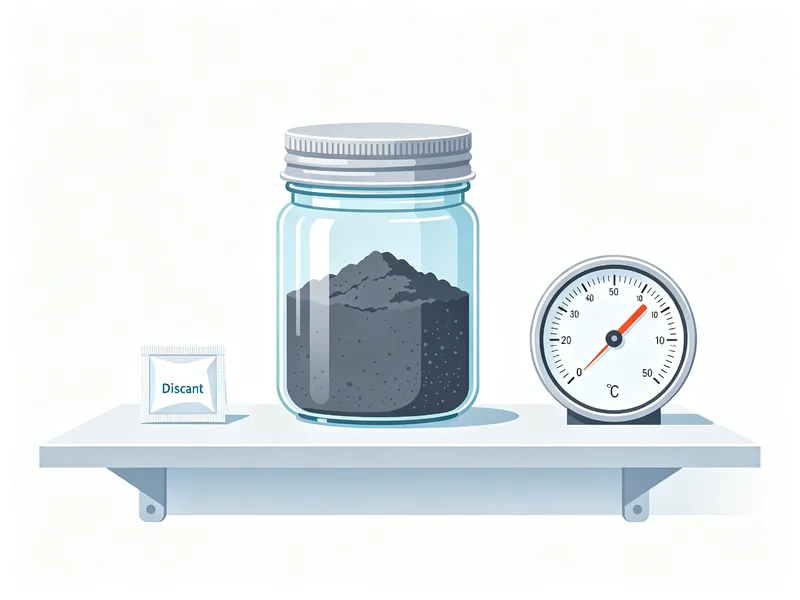
1. Capillary Agglomeration from Moisture — the Main Threat
Diamond micron powder with particle size <10 μm has enormous specific surface area (10–50 m²/g) and is highly hygroscopic. Even at 50–60% relative humidity, powder adsorbs 1–3% water by weight. Water forms menisci between particles, creating capillary pressure that pulls particles into strong agglomerates.
The danger of capillary agglomeration is that it is irreversible unlike simple sticking. After water dries, salt and oxide "bridges" (from impurities dissolved in water) remain between particles, binding them permanently. Such agglomerates cannot be broken by simple stirring — ultrasonic treatment or bead milling is required.
| Relative humidity | Water adsorption (W3 powder) | Agglomeration risk |
|---|---|---|
| < 30% | < 0.3% | Minimal |
| 30–40% | 0.3–0.8% | Low |
| 40–60% | 0.8–2.0% | Medium (sealed container required) |
| 60–80% | 2.0–5.0% | High (agglomeration in 1–2 weeks) |
| > 80% | > 5.0% | Critical (caking in days) |
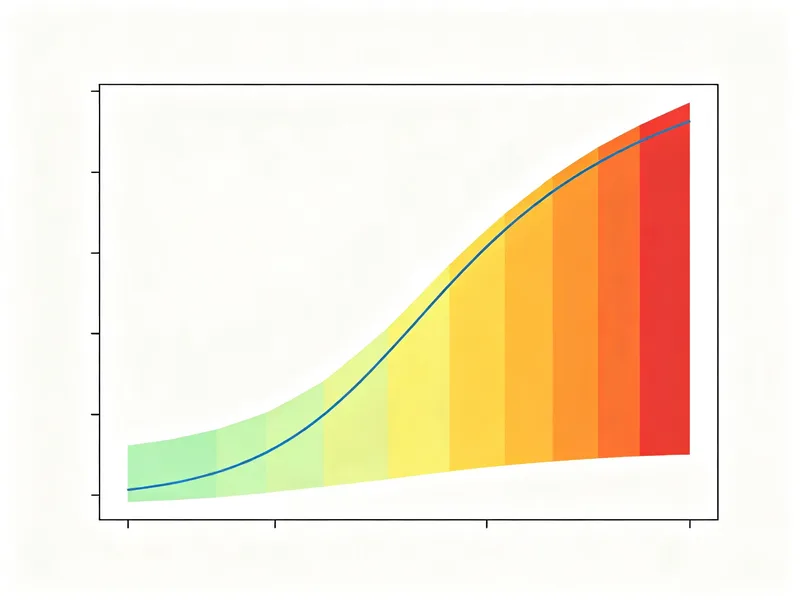
2. Surface Oxidation at High Temperature
Bulk diamond starts oxidizing in air at ~700°C, but the surface of diamond micron powder (especially with defects and impurities) starts oxidizing already at 300–400°C. During long-term storage at temperature >40°C (e.g., in an unconditioned warehouse in summer), slow surface oxidation occurs:
- Oxygen-containing functional groups (–OH, –COOH, –C=O) form on the surface, changing wettability and adhesion to binders
- Metal impurities (Fe, Ni, Co) on the surface oxidize to oxides, which can catalyze further degradation
- Change in surface charge (zeta potential) affects powder dispersibility in slurries
3. Adsorption of Atmospheric Contaminants
The developed surface of diamond micron powder actively adsorbs any volatile compounds from the air:
- Organic vapors (solvents, lubricants, plasticizers from plastic containers) — form an organic film on the surface, worsening wettability and adhesion to metal bonds during PDC sintering
- Hydrogen sulfide and sulfur dioxide (from industrial atmosphere) — react with metal impurities, forming sulfides
- Dust and particles (quartz, metal dust) — mechanical contamination increasing impurity content
4. Electrostatic Sticking
In dry environments (humidity <30%), diamond micron powder accumulates electrostatic charge during pouring and stirring. Charged particles stick to container walls, forming a dense layer that is difficult to remove. This does not chemically spoil the powder, but leads to product loss (up to 5–10% remains on walls) and unevenness during dosing.
Optimal Storage Conditions
| Parameter | Optimal value | Acceptable limit |
|---|---|---|
| Temperature | 15–25°C | 5–35°C |
| Relative humidity | 30–40% | 20–50% |
| Container | Sealed glass or PET container with gasketed lid | Zipper bag (short-term only) |
| Lighting | Dark place (no direct sunlight) | Diffused light acceptable |
| Atmosphere | Dry air or nitrogen (long-term) | Clean air without solvent vapors |
| Shelf life | 2 years (sealed, optimal conditions) | 5 years (with periodic checks) |
Signs of Spoiled Powder
- Visible lumps and agglomerates — powder doesn't flow freely, lumps >1 mm form. Sign of capillary agglomeration.
- Color change — powder becomes grey, yellow or brown instead of characteristic steel-grey. Yellow/brown tint indicates iron oxidation.
- Poor dispersibility — when preparing slurry, powder sinks in lumps, doesn't wet, dry particles remain on surface. Sign of surface change (oxidation or organic film).
- Increased moisture content — powder feels damp, releases water vapor when heated. Measure loss on ignition (LOI) at 110°C.
- Scratches in test polishing — the most reliable test: polish a reference sample and compare with standard. If new scratches appear — powder has degraded.
Regeneration Methods for Spoiled Powder
Not all types of degradation are reversible, but some can be corrected:
- Moisture and capillary agglomeration (reversible) — dry at 100–120°C in vacuum for 4–8 hours, then ultrasonic dispersion in slurry. If agglomerates already formed salt bridges, bead milling may be required.
- Organic surface film (reversible) — anneal at 300–350°C in air for 1–2 hours (above 400°C diamond oxidation starts), then wash with deionized water.
- Metal impurity oxidation (partially reversible) — washing with dilute hydrochloric acid (5–10%) removes iron oxides from surface, but internal inclusions remain.
- Deep diamond surface oxidation (irreversible) — if the surface is already significantly oxidized (color change, poor wettability), original properties cannot be restored. Powder can only be used for less critical applications.
Practical Storage Practices: Silica Gel, FIFO, Repackaging
Using Desiccants
A sachet of silica gel or molecular sieve (3A size) should be placed in every container with W5 and finer powder. Typical dosage — 5–10 g of desiccant per 100 g of powder. The desiccant must not contact the powder directly: place it in a separate cotton bag or attach to the inner side of the lid. Every 6 months, regenerate the desiccant (heat at 120°C for 2 hours) or replace it. The silica gel color indicator (blue → pink) clearly shows when the desiccant is saturated.
FIFO Rotation and Batch Labeling
Each container should have a label with production date, batch number, D50 and purity grade. A FIFO (first-in-first-out) warehouse system ensures that older batches are used first. This is especially important for micron powder, which loses dispersibility over time due to slow surface adsorption. Recommended re-inspection frequency:
| Characteristic | Re-inspection frequency | Method |
|---|---|---|
| Moisture (LOI at 110°C) | Every 3 months | Thermogravimetric |
| D50 (laser diffraction) | Every 6 months | ISO 13320 |
| Dispersibility in suspension | Every 3 months | Visual + ultrasonic |
| Color and appearance | Every container opening | Visual |
| Test polishing (reference) | Every 12 months | Comparison with reference sample |
Repackaging Small Batches
Large packages (1 kg and above) lose seal integrity with frequent opening: each time moist air and dust enter. It is recommended to transfer 100–200 g of powder into a separate daily-use container, while the main package remains sealed in a refrigerator (+4°C) or dry cabinet. This way the main stock is not subjected to repeated wetting-drying cycles.
Storage Sensitivity by Fraction
Not all fractions are equally sensitive to conditions. The finer the powder, the larger its specific surface area and the more sensitive it is to moisture and contaminants:
- W0.5–W3 (ultra-fine) — maximum sensitivity. Store only in inert atmosphere (nitrogen), in a dark cabinet, with desiccant. Shelf life — 12 months. Vacuum packaging recommended.
- W5–W10 (fine) — high sensitivity. Sealed container, humidity <40%. Shelf life — 18 months.
- W14–W40 (medium) — moderate sensitivity. Can be stored in a zipper bag, but in a dry room. Shelf life — 24–36 months.
Quick Incoming Inspection Checklist
When receiving a new batch of diamond micron powder, spend 5 minutes on a simple check — it will save hours of troubleshooting in production:
- Verify batch number and date on the container against the COA.
- Inspect the container for damage, corrosion, damp spots.
- Sprinkle a pinch on white paper — it should flow freely without lumps or unusual colors.
- Compare D50 from the COA with the expected value. Deviation over 10% — reason to request a repeat granulometry.
Key conclusion: diamond micron powder is a "live" product whose properties depend on storage conditions. Investment in controlled storage (conditioned warehouse, sealed containers, desiccants) pays off hundredfold: spoiled powder can lead to rejects of finished products (PCD, tools, optics) whose cost is dozens of times higher than the powder cost. Always verify powder before use, especially if stored for more than 6 months.
Storage Conditions: Parameter Table
| Parameter | Recommendation | Why |
|---|---|---|
| Temperature | 15–25 °C | Dispersion stability |
| Humidity | < 50% RH | Avoids agglomeration |
| Container | PE/glass, sealed | Blocks moisture and dust |
| Environment | No acids/bases | Avoid contamination |
| Shelf life | 2–3 years | If kept dry |
Moisture causes grain clumping and D50 growth on reuse; static electricity on dry powder makes dosing difficult. Before use, dry a portion at 60–80 °C and shake; for long storage, re-sieve a check sample every six months.