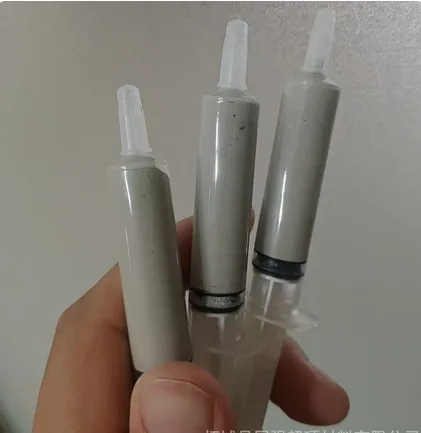
Diamond paste is a homogeneous suspension of diamond micron powders in a viscous carrier (oil, wax or gel). Unlike a grinding wheel where diamond is fixed in a hard bond, in a paste the grit is free: it rolls between the lap and the workpiece, removing ultra-thin layers. This "free cutting" achieves a finish roughness Ra 0.01–0.05 μm — a level unreachable by grinding.
1. The W Grit System: What the Numbers Mean
In the CIS and Russian market, diamond pastes are graded by the W system (from German "Weite" — width). The number after W is the upper grain size limit in micrometers. For example, W14 means 95% of grains are ≤14 μm. Full range is W40 (rough) to W0.1 (superfinish).
| Grade | D50, μm | Operation type | Final Ra |
|---|---|---|---|
| W40 | 40 | Rough truing | 0.4–0.8 |
| W20 | 20 | Preliminary | 0.2–0.4 |
| W10 | 10 | Main lapping | 0.1–0.2 |
| W7 | 7 | Semi-finish | 0.08–0.15 |
| W5 | 5 | Finish | 0.05–0.1 |
| W3 | 3 | Precision | 0.03–0.05 |
| W1.5 | 1.5 | Optical | 0.01–0.03 |
| W1 | 1 | Superfinish | 0.005–0.01 |
| W0.5 | 0.5 | Mirror | < 0.005 |
2. The Carrier: Oil, Wax or Gel — What's the Difference
Diamond paste is 25–35% diamond plus 65–75% carrier. The carrier is not just a "holder": it controls viscosity, heat dissipation and how grains behave between surfaces. Different carriers give different results with the same grit.
Oil-based (lapping oil)
- Medium–high viscosity, doesn't run. Grains move stably, not squeezed out of contact zone.
- Best choice for hand lapping, optics, precision dies.
- Downside: dries slowly, requires degreasing after operation.
Wax-based (hard wax)
- At room temperature it's a hard bar; when heated by friction it softens.
- Good for flat lapping on cast iron/steel, doesn't leave oil stains.
- Downside: under high pressure wax squeezes out, paste stops working.
Water-based (gel)
- Washes off with water, no solvents needed. For finish optics and semiconductors.
- Cools better than oil, doesn't oxidize aluminum and copper.
- Downside: dries out in 10–15 minutes, needs reapplication.
3. How Paste Removes Material: Free Abrasive Machining Mechanism
In a grinding wheel the diamond grain is rigidly fixed and cuts the material like a tool. In paste the grain is free: it rolls between the rotating lap and the workpiece, and material removal proceeds by two parallel mechanisms:
- Micro-cutting: sharp grain edges scratch the surface, removing micro-chips. Dominant on coarse fractions (W10–W40).
- Micro-fracture and brittle chipping: on fine fractions (W3–W0.5) the grain is too small to cut. It presses into the surface, creating micro-cracks that then spall off. Dominant on brittle materials (glass, ceramic, silicon).
Understanding the difference matters in selection: for ductile materials (titanium, stainless steel) need sharp morphology and oil carrier to avoid chip adhesion. For brittle materials (quartz, sapphire) — spherical grains and water carrier to avoid chipping.
4. The Transition Sequence: You Can't Skip a Grade
The most common mistake — after W20 grinding, going directly to W3. Coarser scratches from W20 are not removed by fine paste: fine grains only work on the very top peaks and leave "grooves" from the previous operation. Rule: each step must remove the traces of the previous.
Correct sequence for glass: W20 → W10 → W5 → W3 → W1.5 → W1. Each step takes 5–15 minutes. Trying to shortcut from W20 to W5 takes 3× longer and gives a worse result.
5. Practical Tips
- Apply a thin layer. Excess paste doesn't speed things up — grains float in grease without touching the surface. A thin even layer gives maximum removal.
- Change the lap when changing grade. W10 residue on a surface where you apply W3 = 10 μm scratches that ruin the whole finish. Clean the wheel with alcohol or change the felt disc.
- Control pressure. Too much force fractures grains, generates heat and causes scratches. Light even pressure of 5–15 kPa is optimal.
- Store paste sealed. An open tube dries out in 2–3 months. Wax oxidizes, oil evaporates, grains "agglomerate" into clumps.
Diamond paste is not "shining cream" — it's a precision abrasive tool where grain and carrier parameters are matched so that a given number of steps delivers a given roughness. Understanding how grains actually work in the gap eliminates 80% of typical polishing problems.