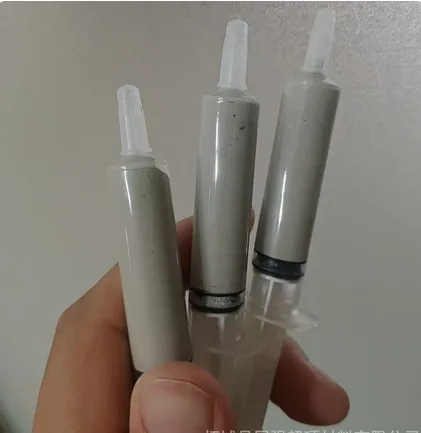
Diamond paste is one of the most common and effective tools for hand and semi-automatic polishing. Material removal rate and surface quality depend on paste composition, diamond powder concentration and grain size selection. This article examines diamond paste composition, classification, selection for different materials and proper application technique.
Diamond Paste Composition
Diamond paste consists of four main components:
- Abrasive —diamond micron powder (5—0 wt%), grain size determines removal and finish
- Carrier —vaseline, paraffin, silicone oil, polyethylene glycol (PEG), water. Determines consistency and lubrication
- Lubricant —oleic acid, stearin, fatty acids. Reduces friction and prevents scratches
- Surfactants —improve wetting and dispersion of diamond grains
Diamond Paste Classification
| Classification | Type | Characteristics | Application |
|---|---|---|---|
| By carrier | Oil-based (vaseline/paraffin) | Thick, sticky, hard to wash off | Metals, hand polishing |
| Water-soluble (PEG/water) | Easy wash-off, clean work | Optics, semiconductors, sapphire | |
| Silicone-based (silicone oil) | High lubrication, heat-resistant | High-temp polishing | |
| By concentration | High (20—0%) | Fast removal, for rough grinding | Rough processing |
| Medium (10—5%) | Universal | Semi-polishing, fine grinding | |
| Low (3—%) | Clean surface, slow removal | Final polishing |
Grain Size Selection for Different Materials
| Material | Rough | Semi-polish | Final | Superfinish |
|---|---|---|---|---|
| Hardened steel | W28–W20 | W14–W10 | W7–W5 | W3–W1 |
| Cemented carbide (WC-Co) | W20–W14 | W10–W7 | W5–W3 | W2.5–W1 |
| Optical glass | W14–W10 | W7–W5 | W3–W1.5 | W1–W0.5 |
| Sapphire | W20–W14 | W10–W7 | W5–W3 | W2.5–W1 |
| Ceramic (Al₂O₃ Si₃N₄ | W28–W20 | W14–W10 | W7–W5 | W3–W1.5 |
| Gemstones | W20–W14 | W10–W7 | W5–W3 | W2.5–W0.5 |
| SiC wafers | W10–W7 | W5–W3 | W2.5–W1 | W0.5–W0.2 |
Proper Paste Polishing Technique
- Surface preparation: clean from previous paste and contaminants, ensure no deep scratches from previous stage
- Paste application: apply thin uniform layer to polishing lap (felt, leather) or directly to workpiece. Do not over-apply —excess paste reduces efficiency
- Polishing: light uniform pressure, circular or figure-8 motions. Constantly change workpiece position for uniform removal. Do not press hard —causes local overheating and scratches
- Control: periodically stop, clean surface and inspect under loupe or microscope. If scratches appear —return to previous grain size
- Cleaning: after polishing, thoroughly clean workpiece and lap from paste residue. For oil-based —solvent (white spirit, isopropyl alcohol). For water-soluble —soapy water
Common Polishing Mistakes
- Too fast transition to fine grain —deep scratches remain and appear at final stage
- Excessive pressure —overheating, paste burning, scratches from embedded grains
- Contaminated paste or lap —foreign particles (dust, scale) cause scratches
- Using old paste —diamond grains crush and lose cutting ability
- Wrong carrier choice —oil-based paste on optics leaves hard-to-wash residues
The Step-Down Principle of Grain Sizes
Paste polishing is a staircase, not a single jump. Each larger fraction leaves its own damage track on the surface, and the next step must remove exactly that track, not the bulk material. If you skip a step, large-grain scratches sit under the finer layer and surface only at final cleaning, when it is too late to redo. The practical rule: each transition changes size by about two to four times and lasts just until the previous step's marks vanish. Do not chase instant gloss —a fast result on coarse grain gets reworked twice.
Why the Carrier Matters More Than It Seems
Buyers often compare pastes on diamond percent and price per gram, overlooking the carrier —yet it decides how cleanly the job ends. A fatty vaseline base lubricates well on steel, but on optics or a silicon wafer it leaves a film hard to wash without streaks. A water-soluble PEG base rinses off with plain water and is preferred where any final residue is unacceptable. A silicone base holds lubrication at high speeds but needs a separate cleaning route, because residual silicone interferes with later coating. Match the carrier to the material and to how the part will be washed after polishing.
Common Paste Questions
Can I thin a thick paste with solvent?
Technically yes, but you then change not only viscosity but the carrier-to-lubricant ratio the maker tuned for grain dispersion. It is better to order the consistency you need, water-soluble or fatty. On-site thinning often causes lumps and uneven application.
How to tell good micron powder inside a paste?
By finish behavior. A clean, narrow micron powder gives even gloss without isolated deep scratches that survive the transition. If rare wide marks keep appearing at W1, the lot's upper fraction was not screened out. Demand upper-size control from the supplier.
Why does the same fraction give different results?
Because bond with the lap, pressure, temperature and cleanliness all act, not just the label number. Most scatter comes from prior paste left on the lap, or from excessive pressure. Keep a log: fraction, time, pressure and lap condition, and deviations are easy to catch.
Brief Conclusion
Diamond paste works as a system: a narrow micron powder, a carrier matched to the material, and a stepped change of fractions. A too-thick layer, too much pressure and a skipped step eat all the benefit of expensive grain. For steady production, order paste by a fixed process route rather than guesswork. We supply micron powder in all standard fractions from W0.5 to W40, each shipment with a size certificate, and keep W5, W10 and W20 in stock for 48h shipping. A trial batch from 1 kg lets you check dispersion and finish on your own lap before a bulk order.
Which Concentration to Choose
Diamond concentration in a paste trades speed for finish. A high twenty-to-thirty-percent load removes material faster, but leaves a deeper micro-relief at the finish that is harder to smooth out. A low three-to-eight-percent load works more slowly, yet reaches mirror on a light film and risks fewer embedded grains. For a rough step it makes sense to take a concentrated paste on a coarse fraction, lowering both size and content toward the finish. Do not look for one universal tube: the same paste cannot be fast on roughing and safe on mirror. Build two or three fractions at different concentrations into the route and you cut total finishing time.
Need diamond powder for your project?
From 1 kg, standard W5/W10/W20 in stock —48h shipping. Custom fractions 3–7 days. Trial batch — from 1 kg.
Request a trial batch and a quote